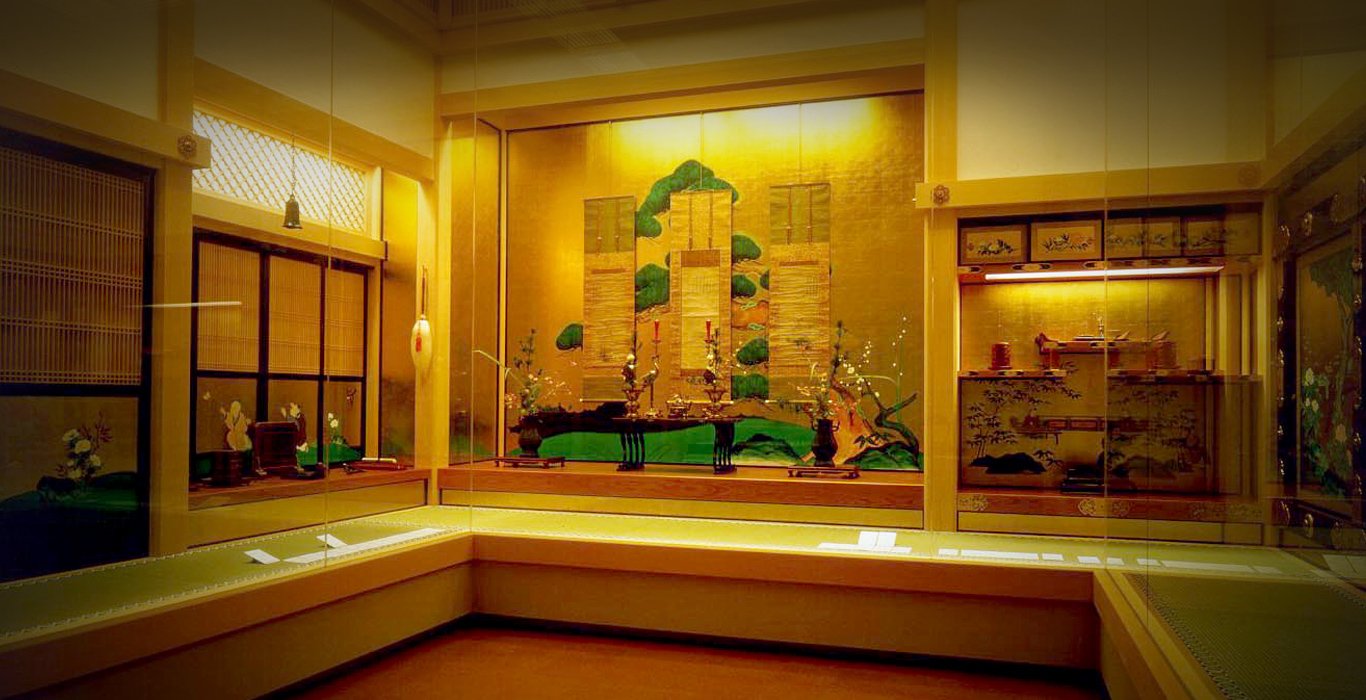
The
use of rustic materials (as if in their natural state) to build
a humble, intimate room or thatched-hut in which to serve guests
tea, as seen here, is the hallmark of sukiya style. This appreciation
of the asymmetrical and "natural" grows out of an
aesthetic quality known as wabi.
Wabi places value on the beauty and spiritual refreshment to
be found in simplicity and spontaneity. far re- moved from mundane
concerns of rank and power. Tea-master SEN no Rikyu (1522-91)
largely introduced wabi into the practice of tea.
Wabi tea developed in reaction to the extravagances of the tea
ceremony during the late 16th century, which in turn were based
on the formal and elaborate serving of powdered tea (adapted
from China) in the residences of the 15th century Ashikaga shoguns.
The more personal, austere way of wabi tea was popular with
merchants and townsmen as well as many warlords.
Under the Tokugawa, wabi tea became an official part of daimyo
functions and ceremonies, such as the reception of a shogunal
visit. The late 17th century heirs of Rikyu established schools
of tea to codify and spread wabi taste. Personal style and innovation
were replaced by tradition and above all by the connoisseur-ship
of old objects. Daimyo expended great efforts to create memorable
tea- house and garden settings at their castles or Edo mansions
and vied in the collection of tea utensils and art objects.
Pieces that had belonged to the Ashikagas or great tea-masters
were especially treasured and given pedigree labels like meibutsu
("distinguished object").