|
The
main rooms were used for official, administrative and ceremonial
purposes. Here the lord issued orders or received guests at
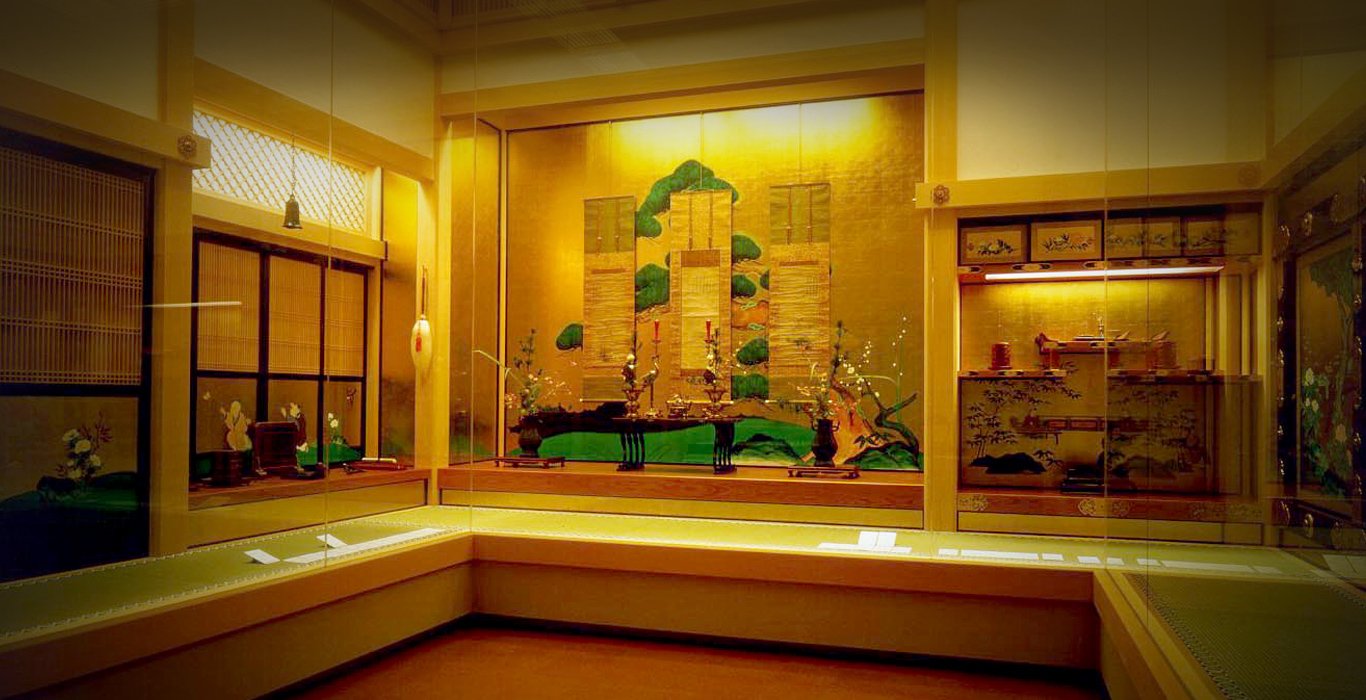
banquets. The lavish gilt decoration and arrangement of space
served to enhance his status and authority and are in the shoin
style. This architectural style developed under the Ashikaga
shoguns in the 15th century and takes its name from the ornamental
windowed alcove with desk (shoin). The rooms had tatami-mat
flooring and were separated from each other by decorated wall
panels (some sliding). Along with a shoin, the innermost audience
chamber (hiroma) featured a raised section for the lord to sit.
a large alcove and a section of staggered shelves to display
art works.
Strict customs and rules, which also originated in the elegant
practices of the Ashikaga shoguns, dictated not only the ornamentation
but the choice and arrangement of art for a shoin setting. Thus
the most desirable objects were, first, items actually owned
by the Ashikaga, known as Higashiyama-gomotsu ("honorable
objects from the Ashikaga palace at Higashiyama") , and
second, other objects from China (Karamono) in the Southern
Song, Yuan and Ming dynasty tastes. |
|