 |
|
|

The
twelfth century Illustrated Handscroll of The Tale of Genji
ranks as a masterpiece in Japanese art and the most famous object
in The Tokugawa Art Museum collection.
Scholars believe that aristocrats originally commissioned twenty
scrolls of text and painted illustrations from calligraphers
and artists at the imperial court in Kyoto. Chosen were the
lyrical and emotional high-points of the romantic novel, The
Tale of Genji, which had been written nearly a century earlier
by MURASAKI SHIKIBU, a court lady. Only sections from three
of the scrolls handed down in the Owari Tokugawa family and
from one scroll long held by the Hachisuka family (now in the
Gotoh Museum) survive today. These are the earliest known paintings,
and in fact earliest extant text, of The Tale of Genji.
The Tale of Genji proved a central current in the culture and
visual arts throughout the Edo period. Painters, particularly
working in the Japanese style (yamato-e), such as the Tosa school,
found in it endless inspiration.
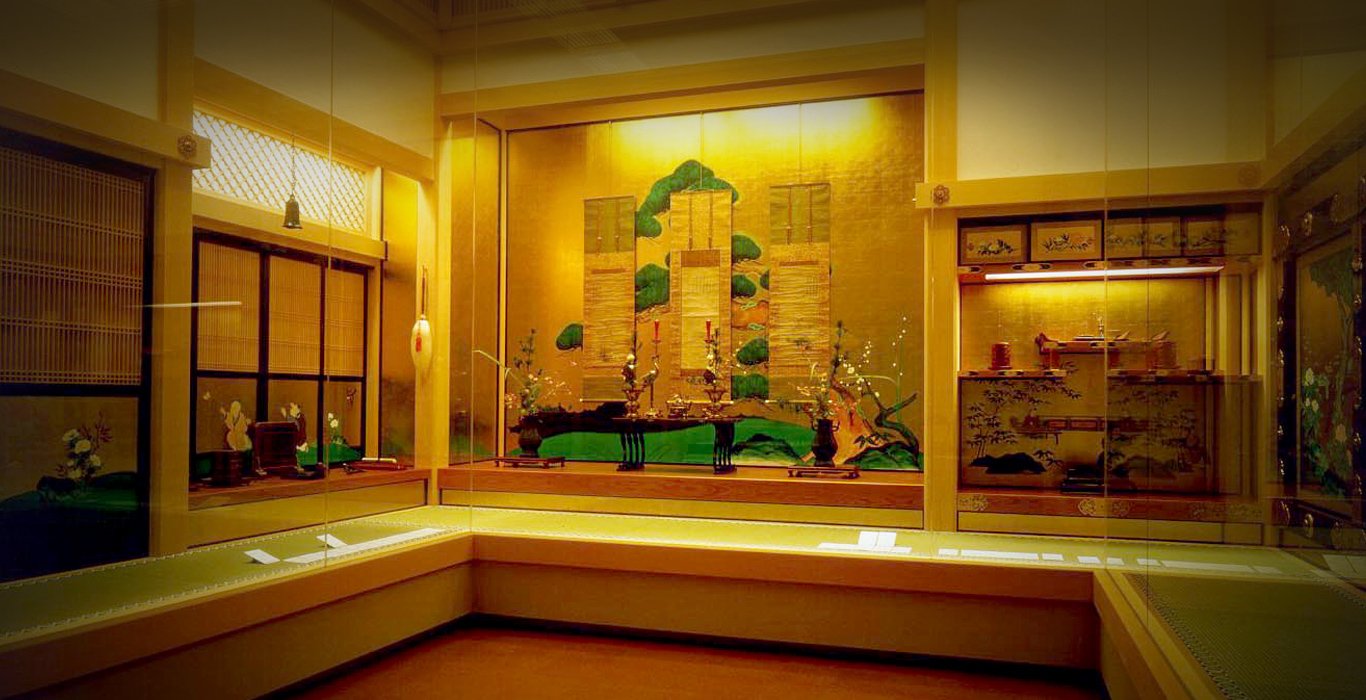
The early twelfth century National Treasure is too vulnerable
to light and air to be continuously on display. Therefore this
exhibit space has been organized to present aspects of both
the original masterpiece and the Edo tradition through later
versions, photographs, modern reproductions and a video program.
|
 |
| |
 |

 |
| |
|
| |

 |
| |
|
|
|
|